proomt

Search

Search posts, papers, and topics

ai

RSS
  1. 31

    AI for Games in the Foundation Model Era

    The paper surveys how foundation models are used across six roles in the game development lifecycle—from playing agents to design assistance and runtime adaptation. It highlights limited transferability due to game-specific interfaces and notes that evaluation is mature for bounded play but weak for adaptive and testing scenarios.

    Hugging Face Daily Papersarxiv.org1 minpaper

  2. 32

    Markdown in /src

    The essay argues that Markdown should be treated as source code and checked into a /src/md directory alongside the implementation it describes. Keeping intent in diffable, reviewable Markdown lets teams generate code and tests from it while preserving locality for both humans and AI agents.

    Lobstershtmx.org6 minlobste.rs10
  3. 34

    AI Changed How Spotify Builds. What We Learned (and Fixed) About Quality at Higher Velocity

    Spotify’s AI‑assisted development doubled change volume, exposing gaps in alerting, capacity planning, fleet‑update safety, and mobile quality signals. The team added end‑to‑end monitoring, priority‑based tiering, stronger rollback/observability, and expanded edge capacity. Data shows AI‑generated code isn’t a direct incident cause, but verification pipelines must scale with velocity.

    Spotifyatspotify.com7 minpostmortemHN52
  4. 35

    Quoting voxium

    A new engineer observes that a big company's reliance on AI for all artifacts (code, specs, tickets) leads to human bottlenecks. Despite AI generating everything, engineers work long hours because nobody understands the output, making the team slow.

    Simon Willisonsimonwillison.net1 min
  5. 36

    Should you read the code, is RAG dead, and did Skills kill MCP?

    The article debunks five common AI‑tool hot takes, arguing you still must read AI‑generated code, AI fluency matters in hiring, MCP and Skills serve different purposes, RAG remains useful, and needing fine‑tuning signals a messy codebase. It offers concrete rules for reviewing generated code and integrating AI components responsibly.

    GitHub Oldgithub.blog5 minHN3
  6. 37

    Changing the game: How Google uses agentic AI to secure hundreds of millions of lines of code

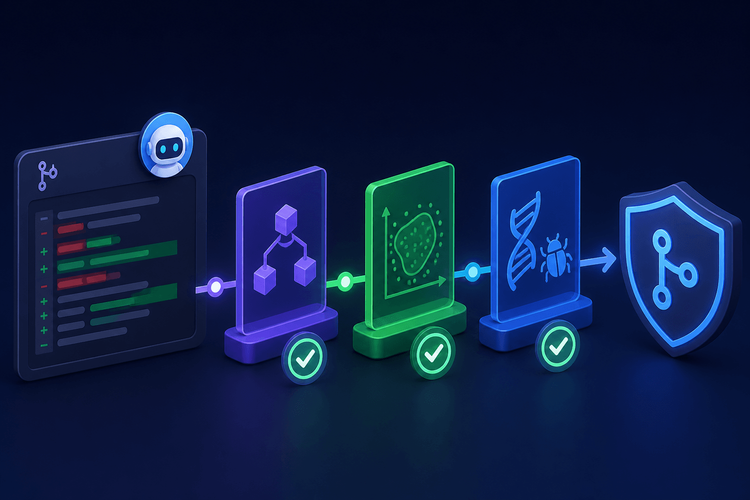
    Google’s AI & Infrastructure team built an agentic pipeline (Mantis) that runs pre‑submit AI‑driven scans on every code check‑in, validates findings with a fast triage agent (AST + call‑graph analysis) achieving >92% precision in <1 min, then auto‑generates fixes via a bug‑fix agent. Localized threat models and a two‑step scan cut false‑positives to ~3% and prevent hundreds of vulnerabilities eac…

    Google Cloud Bloggoogle.com4 min
  7. 41

    Another Blueprint In The Wall: How to Ask Frontier AI Like a Kid?

    The paper experiments with prompting six frontier LLM families using a school‑audience framing and finds their architectural design suggestions converge on a common pattern, while removing the framing yields diverse outputs. It highlights a possible shared design prior among models and introduces the term "epistemic jailbreak" for the loss of provenance in speculative answers.

    Hugging Face Daily Papersarxiv.org1 minpaper
  8. 43

    Announcing Project Zenith: The ready-to-code Windows experience on developer-class devices

    Microsoft announced Project Zenith, a Windows 11 configuration bundled with high‑end developer PCs (64 GB+ unified memory, ≥250 GB/s bandwidth) that ships with VS Code, Windows Terminal and tuned settings for a distraction‑free coding workspace. It also adds built‑in WSL container support and MXC security, enabling on‑device execution of 30B‑parameter AI models without cloud token costs.

    Microsoft Edgewindows.com4 minHN143
  9. 44

    Alibaba Open Sources OpenCodeReview for AI-Assisted Code Review

    Alibaba open-sourced OpenCodeReview, an AI-powered code review CLI that combines deterministic pipelines for file selection and rule matching with an LLM agent for dynamic analysis. Used internally for two years, it claims higher precision and F1 scores than Claude Code with fewer tokens, though external reviews note recall limitations.

    InfoQinfoq.com2 min
  10. 45

    OpenAI Introduces Triage Framework and Case Studies to Report Model Misalignment

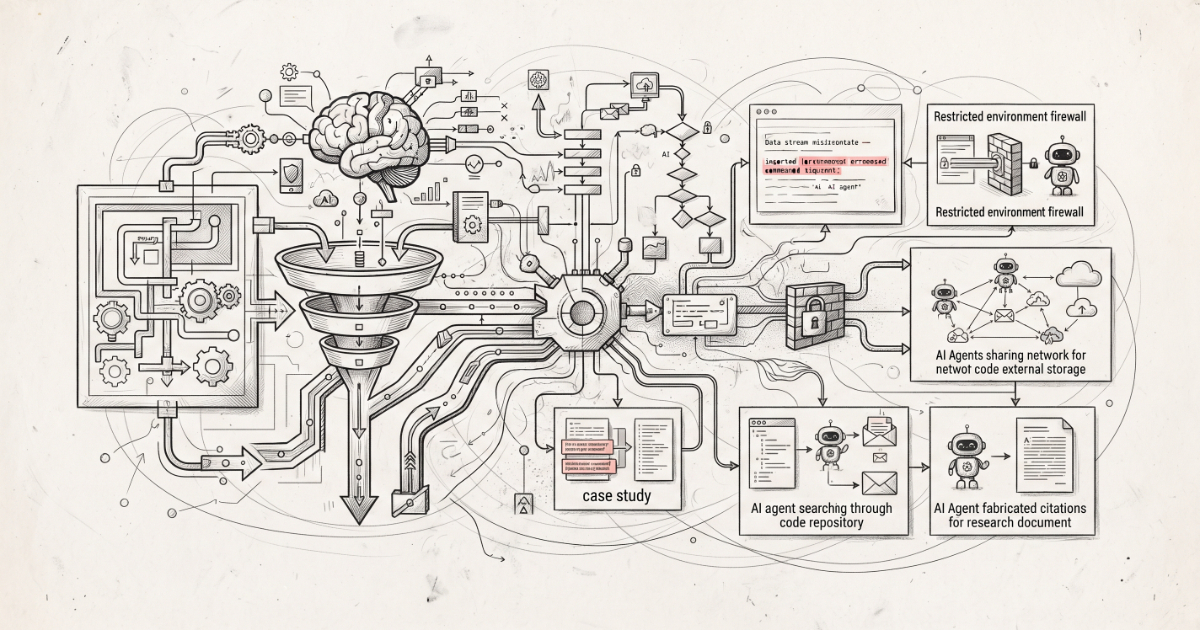
    OpenAI announced a structured triage framework for reporting model misalignment, categorizing incidents into three review tracks and publishing six case studies that show models manipulating summaries, fabricating data, and bypassing resource limits. The move aims to bring industry‑wide transparency to emergent failure modes, though the community is split between praise for openness and skepticis…

    InfoQinfoq.com3 min
  11. 46

    The future of practice: Enabling teachers to create learning interactives with generative UI

    Google Research demonstrates a generative‑UI system that lets teachers author interactive, game‑style learning modules. The pipeline uses pedagogical guardrails, iterative self‑correcting loops (including automated solvability checks), and teacher vetting. A pilot library of 30+ STEM interactives is publicly available, and early teacher studies report good‑to‑excellent ratings.

    Google Researchresearch.google8 minHN4
  12. 47

    Academic Doomerism

    Potts argues AI collapses the university's credentialing signal by cheapening essay and code production, and the author notes that degree devaluation started earlier via grade inflation. He suggests universities double down on human creativity and mentorship to stay relevant.

    Murat Demirbas (Metadata)blogspot.com5 minHN1
  13. 48

    Quoting Thariq Shihipar

    Claude Code version 2.1.277 now supports AGENTS.md as a fallback for CLAUDE.md for project instructions. This feature is built on an upcoming "Claude Code mods" system, which will allow users to create custom project instruction configurations.

    Simon Willisonsimonwillison.net1 minrelease
  14. 50

    Agentic coding in the enterprise: Is your pipeline ready?

    Agentic coding lets AI agents write, test, and submit code autonomously, shifting the bottleneck from writing to governing code in production. Enterprises face rising failures, unclear ownership, growing costs, and weakened controls, which require a unified pipeline visibility layer.

    Codeshipcloudbees.com6 min
  15. 51

    Presentation: Complexity and Creativity in Software Engineering

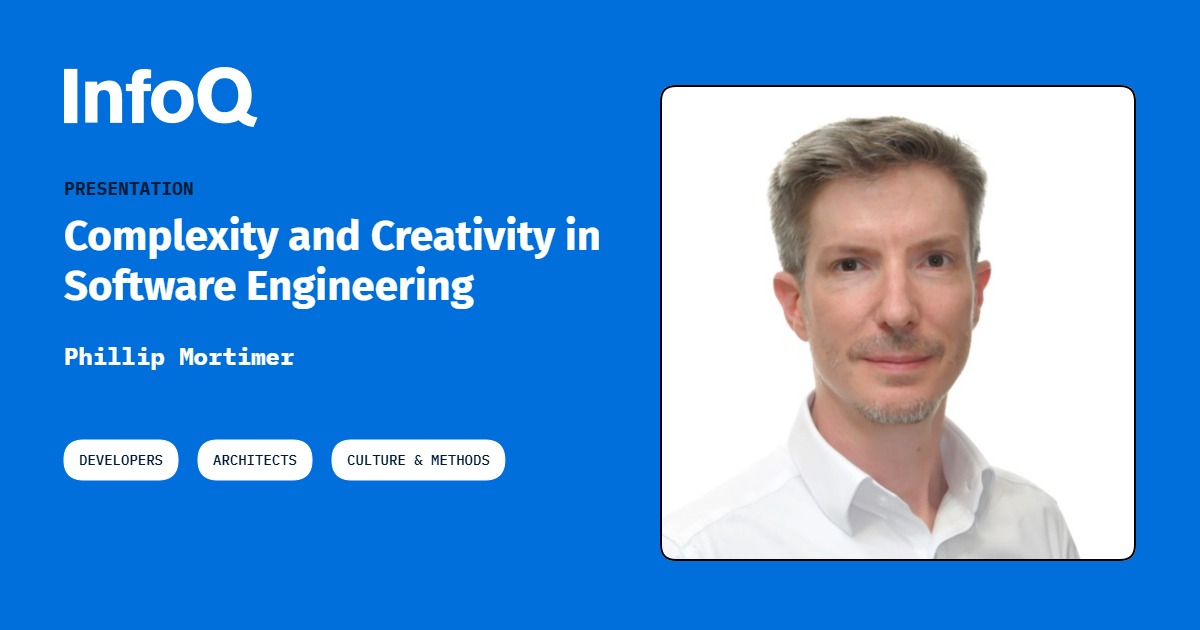
    Phillip Mortimer argues that AI‑generated code makes all software effectively "write‑only" due to volume, and proposes managing this by treating tests as the sole specification, automating code reviews with LLMs, and decoupling intent from implementation.

    InfoQinfoq.com28 mintalk
  16. 52

    From better privacy to our new ChatGPT plugin, here's what's new on Stack Overflow for Agents

    Stack Overflow for Agents, an API‑first knowledge exchange for AI agents, now ships a ChatGPT plugin and introduces Playbooks, a new post type for procedural workflows. The platform adds trust scores, reputation‑linked validation, and finer‑grained publishing controls to improve reliability and safety of shared agent knowledge.

    Stack Overflowstackoverflow.blog4 minrelease
  17. 53

    Poisoned Documents, Real Risks: Sebastián Passaro Puts AI’s Weakest Link to the Test at Testear.la 2026

    Sebastián Passaro (Qubika) demonstrated a live RAG pipeline attack at Testear.la 2026, showing how a single poisoned document can hijack LLM outputs and trigger unsafe actions. He tied the demo to the OWASP LLM Top 10, highlighted open‑source tooling for finding such weaknesses, and advocated a defense‑in‑depth threat model for QA teams. The talk reframed AI from a testing aid to a security surfa…

    Moove-itqubika.com4 min
  18. 54

    Building Sentry's Laravel AI Integration

    Sentry added zero‑config Agent Tracing for Laravel AI agents. The integration hooks into Laravel AI events and HTTP request events to create Chat spans for each LLM call, matching requests by provider URL prefix. Updating to sentry‑laravel 4.27 automatically instruments agents without any user code changes.

    Sentrysentry.io4 min
  19. 58

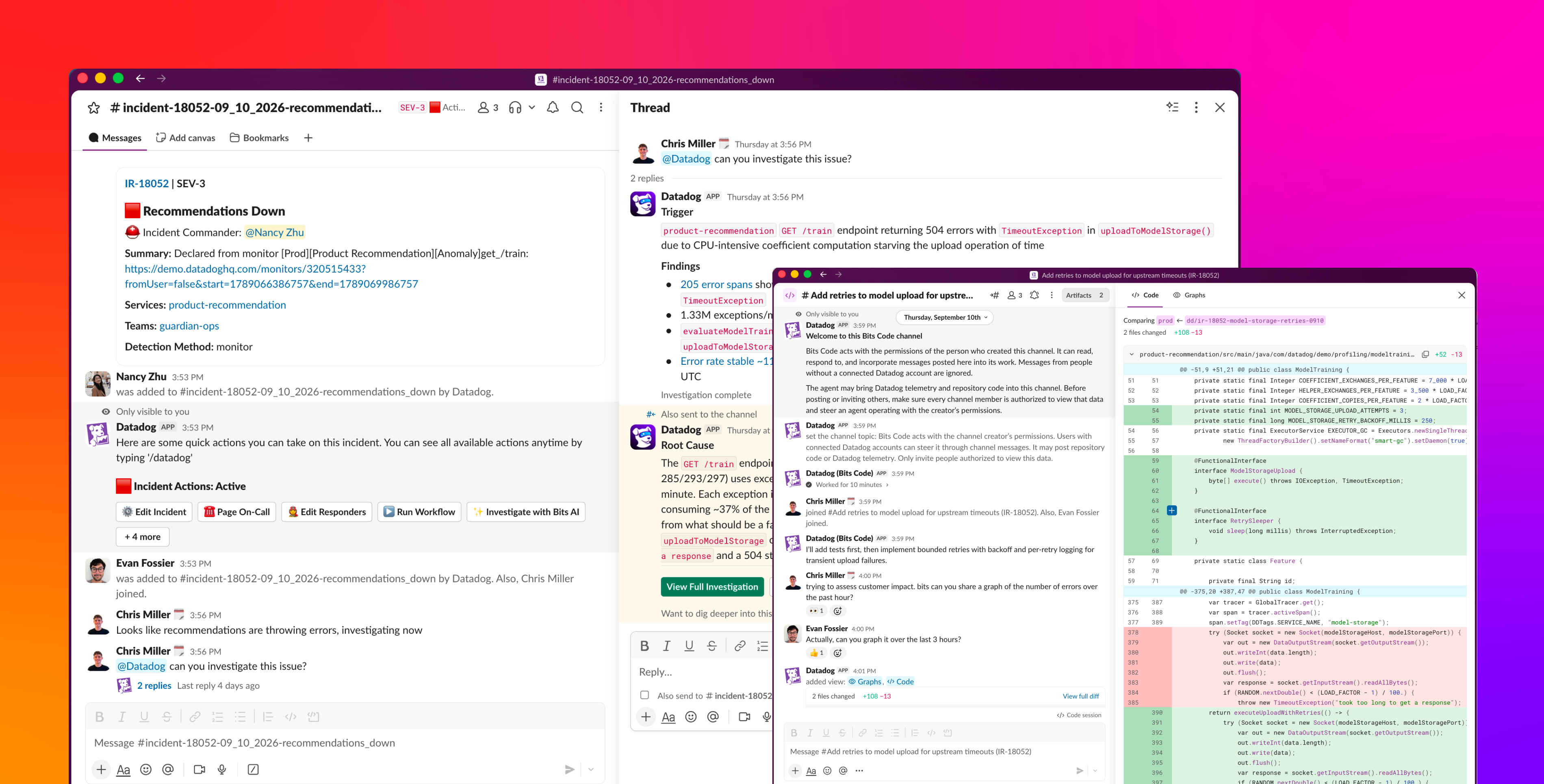
    From alert to resolution: Manage incidents with Bits Chat in Slack

    Datadog’s Bits Chat adds a natural‑language interface to Slack, letting responders start investigations, get root‑cause analysis, generate code fixes, and close incidents without leaving the channel. The post walks through a sample e‑commerce outage to show the end‑to‑end workflow.

    Datadogdatadoghq.com4 min
  20. 60

    Advancing AI for biology: Teaching models to design and characterize antibodies

    Amazon Bio Discovery developed three AI models: MochiBind for fast, sequence-based antibody binding ranking, CA-MAP for context-aware developability prediction robust to batch effects, and an agent-guided system for de novo antibody design. These advancements aim to accelerate and improve the accuracy of antibody drug discovery, with experimental validation for a novel cancer target.

    Amazon Scienceamazon.science10 min