proomt

Search

Search posts, papers, and topics

performance

RSS
  1. 65
    1 points

    MiniCPM5-2B Ranks First Among Open-Weight Models Under 4B

    MiniCPM5-2B, a 2.6 B‑parameter dense Llama‑style model, tops the Artificial Analysis GDPval‑AA v2 benchmark (831 Elo) and sits on the Pareto frontier of the Intelligence Index v4.2 despite being far smaller than competing models. The post breaks down its capability density, token‑cost efficiency, architecture, and three‑stage training (SFT, RL, on‑policy distillation) to explain why it outperform…

    SitePointsitepoint.com10 min
  2. 67

    NVIDIA Vera Rubin NVL72 Delivers Leading Performance in MLPerf Inference v6.1 Debut

    NVIDIA’s Vera Rubin NVL72 AI inference system shows up to 3.7× higher throughput than the prior GB300 NVL72 on MLPerf v6.1 benchmarks (Qwen3‑VL, DeepSeek‑R1), achieves 99% scaling efficiency across 288 GPUs, and benefits from software optimizations (NVFP4 precision, kernel fusion, disaggregated serving). The post is a product announcement with concrete benchmark numbers but limited technical dept…

    Nvidianvidia.com4 min
  3. 68

    From Megawatts to Tokens: How NVIDIA Maximizes AI Factory Production

    NVIDIA’s DSX platform lets AI data‑centers shift workloads in response to grid signals, squeezing ~24% more token throughput (4 M→5 M tps) and ~23% better performance‑per‑watt on a fixed megawatt budget. The first production demo used Emerald AI’s Conductor to drop a 4 MW load to 3 MW in under a minute without interrupting high‑priority jobs. DSX MaxLPS reallocates headroom across HGX B200 server…

    Nvidianvidia.com5 min
  4. 72

    MilleMiglia: A realistic instance generator for middle-mile logistics

    MilleMiglia is an open‑source C++ generator that creates realistic, privacy‑preserving middle‑mile logistics instances (space‑time graphs with fixed schedules, throughput limits, and synchronization constraints). It uses data‑driven spatial, demand, and rotation distributions, serializes with protobuf, and ships small files for small‑toy to continent‑scale problems, enabling both exact/heuristic…

    Google Researchresearch.google7 min
  5. 75

    M4N VM family, now GA: Highest per-core IOPS and throughput for I/O and memory-bound workloads

    Google Cloud’s GA‑available M4N VM family pairs 5th‑gen Intel Xeon CPUs with Google’s custom Titanium offload to deliver up to 1 M IOPS, 25 GiB/s block‑storage throughput, 400 Gbps VM‑to‑VM bandwidth, and a 26 GB/vCPU memory ratio (up to 5.9 TiB RAM). The design targets memory‑bound, I/O‑intensive workloads (Oracle, SAP HANA, vector search, real‑time analytics) and claims >20 % TCO reduction for…

    Google Cloud Bloggoogle.com5 min
  6. 77

    We Didn't Want to Build Another Java Server

    Codename One introduced an experimental native Java backend that compiles Java controllers to a tiny native executable via ParparVM. Benchmarks show sub‑millisecond startup, 10‑40 MiB memory, and up to 20 % higher request throughput than a Go fasthttp server.

    CodeName Onecodenameone.com15 min
  7. 78

    Fixing Server Component Bundle Leaks in Next.js with AST Linting

    Server‑only code can silently inflate client bundles in Next.js 15+ apps. The article shows how to spot leaks with @next/bundle-analyzer, prevent them by removing shared barrel files or adding the `server-only` guard, and enforce a deny‑list of server modules via a custom ESLint rule that scans the AST of files with a `'use client'` directive. The rule is wired into a CI bundle‑budget check using…

    SitePointsitepoint.com14 min
  8. 79

    TanStack Charts Introduced with a Framework Agnostic Grammar of Graphics for TypeScript

    TanStack Charts α is a framework‑agnostic, TypeScript‑first charting library that implements a grammar‑of‑graphics API (marks, scales, channels, transforms, layers). It ships as a single npm package with adapters for React, Preact, Vue, Solid, Svelte, Angular, Lit, and vanilla DOM, and can run on server or client. The runtime is headless; type inference stays tied to the source row, so each mark…

    InfoQinfoq.com2 minrelease
  9. 80

    pgAssistant 3.8.0 : continuous improvement loop for Postgres

    pgAssistant 3.8.0 expands from a tuning advisor to a continuous PostgreSQL improvement platform, adding a Collector that records historical workload and environment data. It lets teams run an Observe‑Diagnose‑Prioritize‑Plan‑Implement‑Measure loop, compare consecutive snapshots, and measure the impact of applied recommendations.

    PostgreSQLpostgresql.org1 minrelease
  10. 81

    Faster Maps: Chasing Swiss Speed

    ParparVM’s HashMap suffered catastrophic miss latency due to linear probing on dense integer keys. By adopting CPython‑style perturbed probing (Swiss‑table style) and extending tagged immediate values to more primitives, miss latency dropped from 32 s to ~45 ms, allocation pressure fell dramatically, and overall performance stayed roughly flat despite a modest hit‑time slowdown.

    CodeName Onecodenameone.com8 min
  11. 82

    Five models pass the easy code reviews. Then the diffs get hard.

    A hands‑on benchmark of five LLM code‑review models (Claude Opus 5, GPT 5‑6 Sol, Grok 4.6, Kimi 3, GLM 5.3, Qwen 3.8 Max, DeepSeek v4 Pro) shows that all models ace tiny 15‑line diffs but diverge sharply on 100‑300‑line, cross‑file changes. The author built a deterministic harness (single HTTP call, fixed system prompt, JSON output) and measured detection rate, false‑positives, latency, token usa…

    Bjørn Johansenbjornjohansen.com16 min
  12. 83

    ClickHouse is now available on the dbt platform

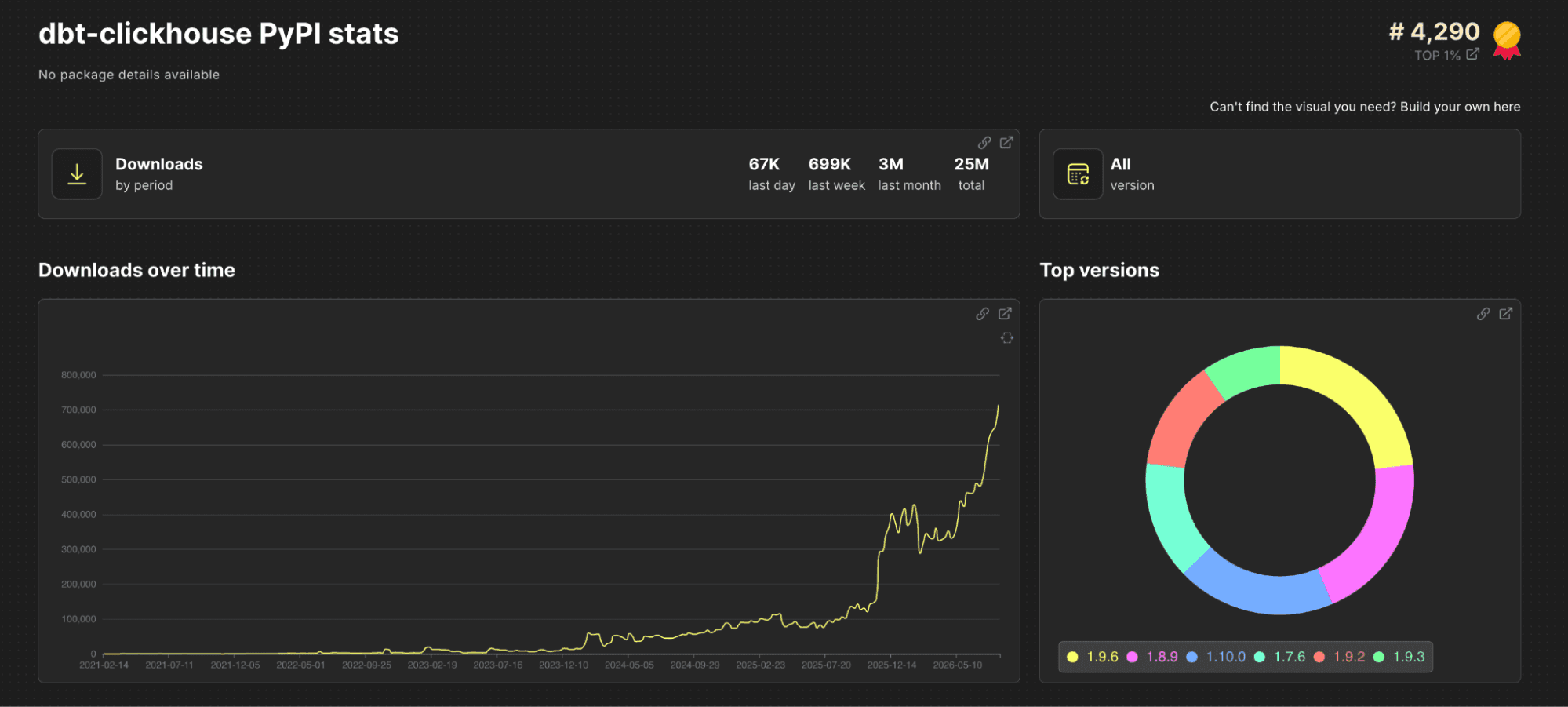
    ClickHouse released a public‑beta dbt v2 adapter written in Rust that ships inside the dbt binary and talks to ClickHouse via the new ADBC driver. The adapter promises up to 30× faster dbt parsing and leverages ClickHouse’s sub‑second, high‑concurrency engine (e.g., materialized views, MCP server). A private‑beta integration on the dbt Platform now lets users develop, schedule, and catalog ClickH…

    ClickHouseclickhouse.com8 min
  13. 84

    Knowing When Your Composite Index Earns Its Write Cost

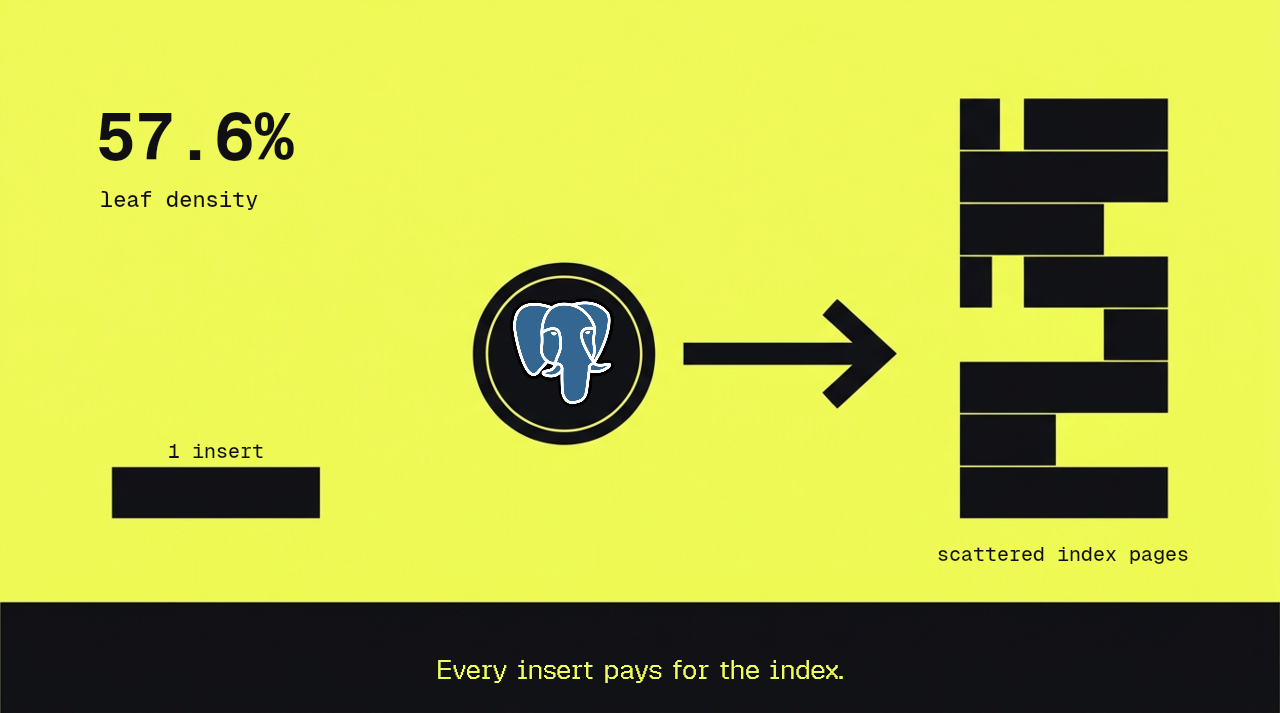
    This guide explains how to evaluate the trade-off of adding a composite index in PostgreSQL by quantifying its read benefits and write costs. It provides a method to measure the impact on ingest throughput and decide if the index earns its overhead based on your system's peak ingest ceiling.

    Timescaletigerdata.com8 min
  14. 88

    Agent Substrate brings high-density, scalable, trusted infrastructure to GKE

    Agent Substrate is an open‑source runtime for AI agents that runs on GKE. It uses Cloud Hypervisor microVMs or gVisor sandboxes to give kernel‑level isolation, a custom control‑ and data‑plane that can suspend/resume agents in <500 ms, and a “zero‑idle” model that packs >1 000 dormant agents per host (≈10× density vs. containers). GKE integration adds custom ComputeClasses, spot/on‑demand pools,…

    Google Cloud Bloggoogle.com6 min
  15. 90

    GLM 5.3 FlashX now available on AI Gateway

    Vercel AI Gateway now offers the GLM‑5.3‑FlashX model, a fast (~200 tps) multimodal coding LLM. The post includes a TypeScript streaming example, notes the model’s fit for coding agents and interactive tools, and lists AI Gateway features (unified API, usage tracking, retries/failover, custom reporting, key budgets, routing rules) with no platform fee.

    Vercelvercel.com1 minrelease
performance posts and papers · proomt