proomt

Search

Search posts, papers, and topics

architecture

RSS
  1. 31

    Shared Selective Persistent Memory for Agentic LLM Systems

    Apple proposes a memory architecture for agentic LLMs that selectively persists reusable context (specs, schemas, configs, constraints) across sessions and users. Shared workspaces with role‑based access and a zero‑token data‑refresh mechanism cut token usage by 97×, reduce task time by 14×, and raise task‑completion rates to 96% versus 71%‑79% for baselines.

    Apple Machine Learning Researchapple.com1 minpaper
  2. 32

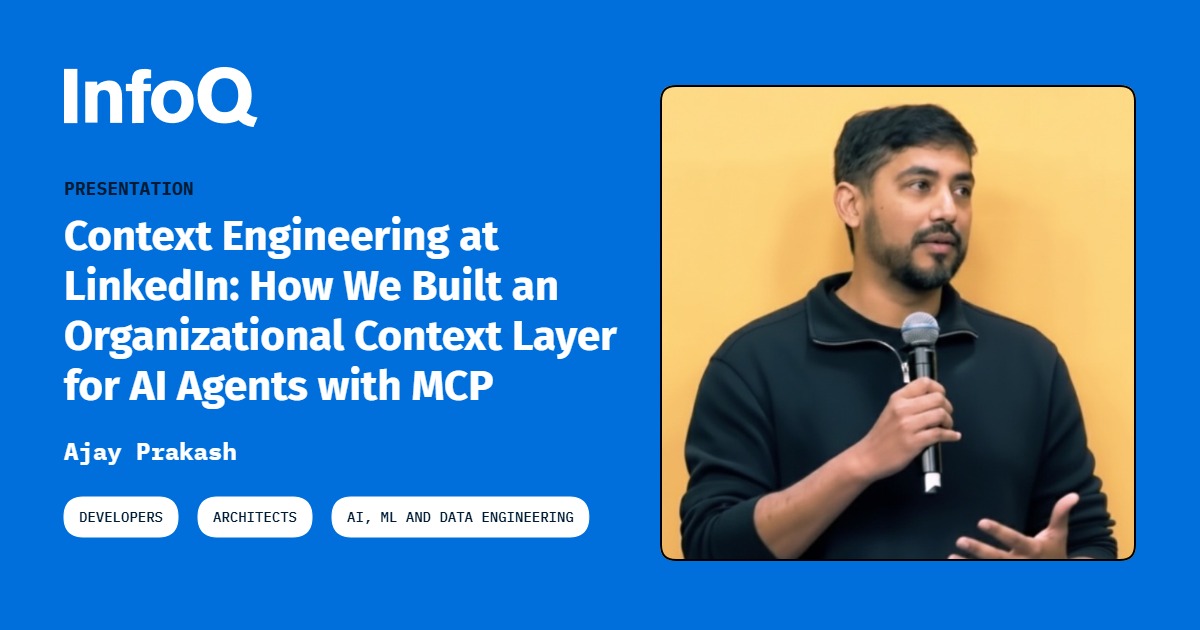
    Presentation: Context Engineering at LinkedIn: How We Built an Organizational Context Layer for AI Agents with MCP

    LinkedIn built a “Contextual Agent Playbooks and Tools” layer that wraps internal services (code search, docs, feature flags, etc.) behind the open‑source Model Context Protocol (MCP). By feeding LLM‑powered coding agents the exact internal artifacts they need, the agents can diagnose incidents, generate PRs, and update incident tickets in minutes, delivering a reported 20 % productivity gain wit…

    InfoQinfoq.com28 mintalk
  3. 34

    Another Blueprint In The Wall: How to Ask Frontier AI Like a Kid?

    The paper experiments with prompting six frontier LLM families using a school‑audience framing and finds their architectural design suggestions converge on a common pattern, while removing the framing yields diverse outputs. It highlights a possible shared design prior among models and introduces the term "epistemic jailbreak" for the loss of provenance in speculative answers.

    Hugging Face Daily Papersarxiv.org1 minpaper
  4. 35
    1 points

    MiniCPM5-2B Ranks First Among Open-Weight Models Under 4B

    MiniCPM5-2B, a 2.6 B‑parameter dense Llama‑style model, tops the Artificial Analysis GDPval‑AA v2 benchmark (831 Elo) and sits on the Pareto frontier of the Intelligence Index v4.2 despite being far smaller than competing models. The post breaks down its capability density, token‑cost efficiency, architecture, and three‑stage training (SFT, RL, on‑policy distillation) to explain why it outperform…

    SitePointsitepoint.com10 min
  5. 36

    From Megawatts to Tokens: How NVIDIA Maximizes AI Factory Production

    NVIDIA’s DSX platform lets AI data‑centers shift workloads in response to grid signals, squeezing ~24% more token throughput (4 M→5 M tps) and ~23% better performance‑per‑watt on a fixed megawatt budget. The first production demo used Emerald AI’s Conductor to drop a 4 MW load to 3 MW in under a minute without interrupting high‑priority jobs. DSX MaxLPS reallocates headroom across HGX B200 server…

    Nvidianvidia.com5 min
  6. 41

    From Individual Experiments to a Shared AI Practice: How Avant Scaled AI-Assisted Engineering

    Avant replaced many personal AI‑assistant setups with a single, organization‑wide Claude Code configuration that embeds the company’s coding standards, project‑tracking links, and documentation. Treated as an internal product, the setup is versioned, owned by delivery engineers, and iteratively improved. The shared tool speeds routine tasks (scaffolding, tests, migrations, docs) and enforces cons…

    Moove-itqubika.com2 min
  7. 42

    Use Curiosity, Craft, and Care to Decide What AI Should Write

    The post proposes a three‑principle framework—Curiosity, Craft, and Care—to decide how much AI should author each artifact in a software development workflow. It argues that AI can be used aggressively for exploratory, disposable outputs (Curiosity) but should be limited for artifacts that commit the team to decisions (Craft) and for communications that require personal ownership (Care). The auth…

    Atomic Objectatomicobject.com4 min
  8. 43

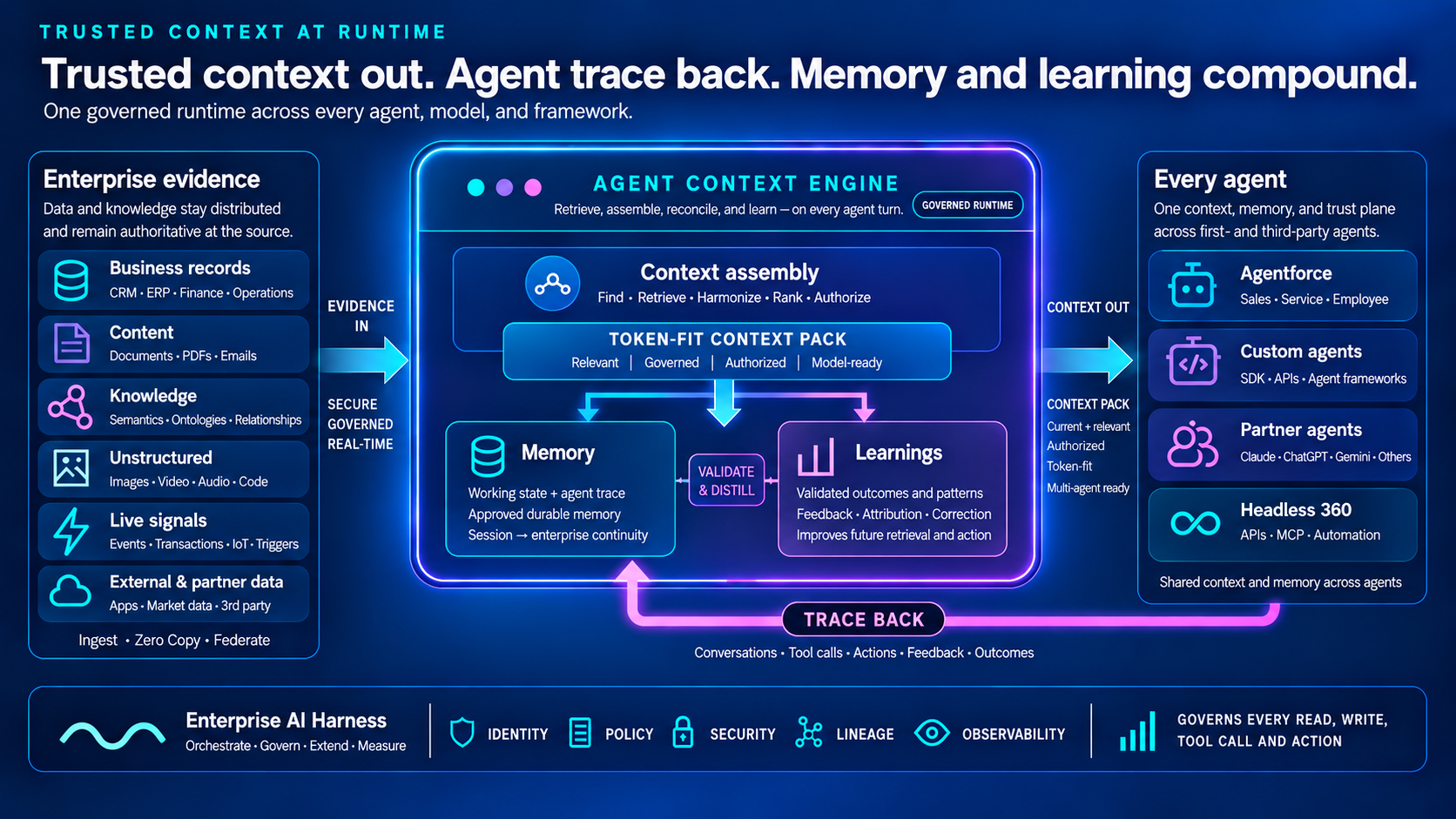
    How Data 360 Builds Trusted Context: The Enduring Layer for Enterprise AI

    Salesforce’s Data 360 provides a shared runtime that assembles the minimal, authorized slice of enterprise data (“Trusted Context”) for each AI‑agent turn. A six‑stage Agent Context Engine (Resolve, Plan, Reconcile, Govern, Compile, Learn) pulls data from structured, unstructured, and streaming sources across Salesforce, Snowflake, Databricks, etc., applies fine‑grained policy, and returns a toke…

    Salesforce Engineeringsalesforce.com11 min
  9. 44

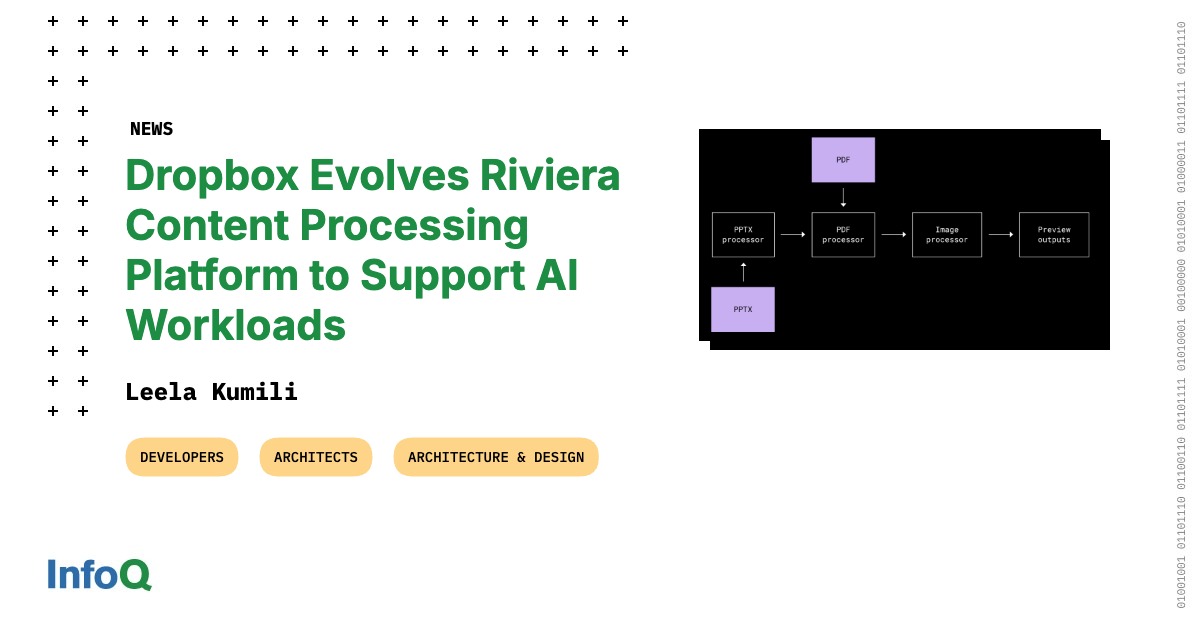
    Dropbox Evolves Riviera Content Processing Platform to Support AI Workloads

    Dropbox’s Riviera platform has been expanded from a preview service into a universal, composable content‑processing system that now handles hundreds of thousands of transformations per second across 300+ file types. The architecture separates orchestration from execution, adds a plugin model, and offers async public APIs so internal and external AI workloads can reuse cached transformations.

    InfoQinfoq.com2 min
  10. 45

    Article: Beyond Relevance: A Governance-First Architecture for Enterprise Personalization

    The article proposes a governance‑first architecture for enterprise personalization, where policy‑driven steps (memory, journey graph, AI routing, scoring, trust checks, outcome simulation) shape the recommendation before it is returned. A reference FastAPI implementation demonstrates the pattern with external YAML policies and optional LLM assistance.

    InfoQinfoq.com19 min
  11. 47

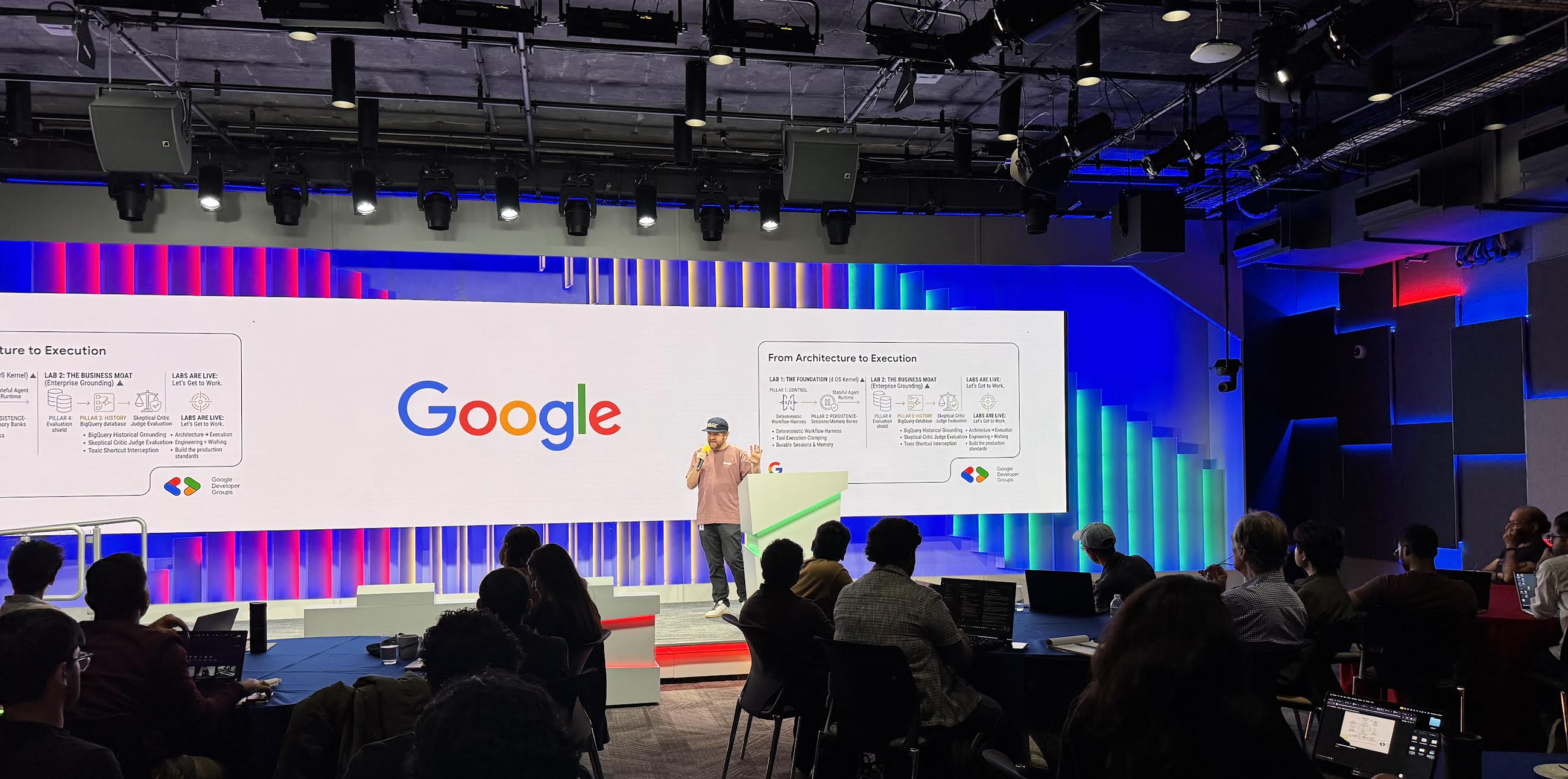
    The DevFest Community Workshop Experience: Building Real Agents Together

    Google’s DevFest Community Workshop introduced a “Workbench” format that emphasizes architectural mental models over copy‑paste code, guiding engineers to build long‑running, self‑evolving multi‑agent systems with the Agent Development Kit and Gemini Enterprise platforms. Attendees learned state‑separation, workflow pausing, and self‑patching pipelines, and the series will continue in five more c…

    Google Cloud Bloggoogle.com2 min
  12. 48

    Fixing Server Component Bundle Leaks in Next.js with AST Linting

    Server‑only code can silently inflate client bundles in Next.js 15+ apps. The article shows how to spot leaks with @next/bundle-analyzer, prevent them by removing shared barrel files or adding the `server-only` guard, and enforce a deny‑list of server modules via a custom ESLint rule that scans the AST of files with a `'use client'` directive. The rule is wired into a CI bundle‑budget check using…

    SitePointsitepoint.com14 min
  13. 49

    How Databricks’ marketers use data 3x more with Genie, an AI analytics assistant

    Databricks built Marge, a Genie‑powered conversational analytics assistant on a governed Marketing Lakehouse. By starting with a single high‑value use case (email campaign performance), documenting data, encoding verified answers, teaching business terminology, and embedding the tool in existing ticket workflows, they achieved 85% adoption, 3× higher data usage in decisions, 50% QoQ usage growth,…

    Databricksdatabricks.com10 min
  14. 50

    Write End-to-End Tests in Your Backend’s Language

    This article advocates writing end-to-end tests in the backend's language to leverage domain models and persistence tools for efficient test data setup. It details a strategy for structuring E2E tests with inline data creation, small helpers, and parallel execution considerations.

    Atomic Objectatomicobject.com7 min
  15. 51

    Cloudflare Introduces the Agent Development Lifecycle to Replace Traditional SDLC

    Cloudflare’s Agent Development Lifecycle (ADLC) replaces the classic SDLC with an autonomous, event‑driven workflow system that lets AI agents handle code generation, testing, deployment, and maintenance. The platform builds on Cloudflare Workflows and the new @cloudflare/ci library to spin up containers, run headless browsers, and chain steps with caching and credential support. Observability is…

    InfoQinfoq.com2 min
  16. 52

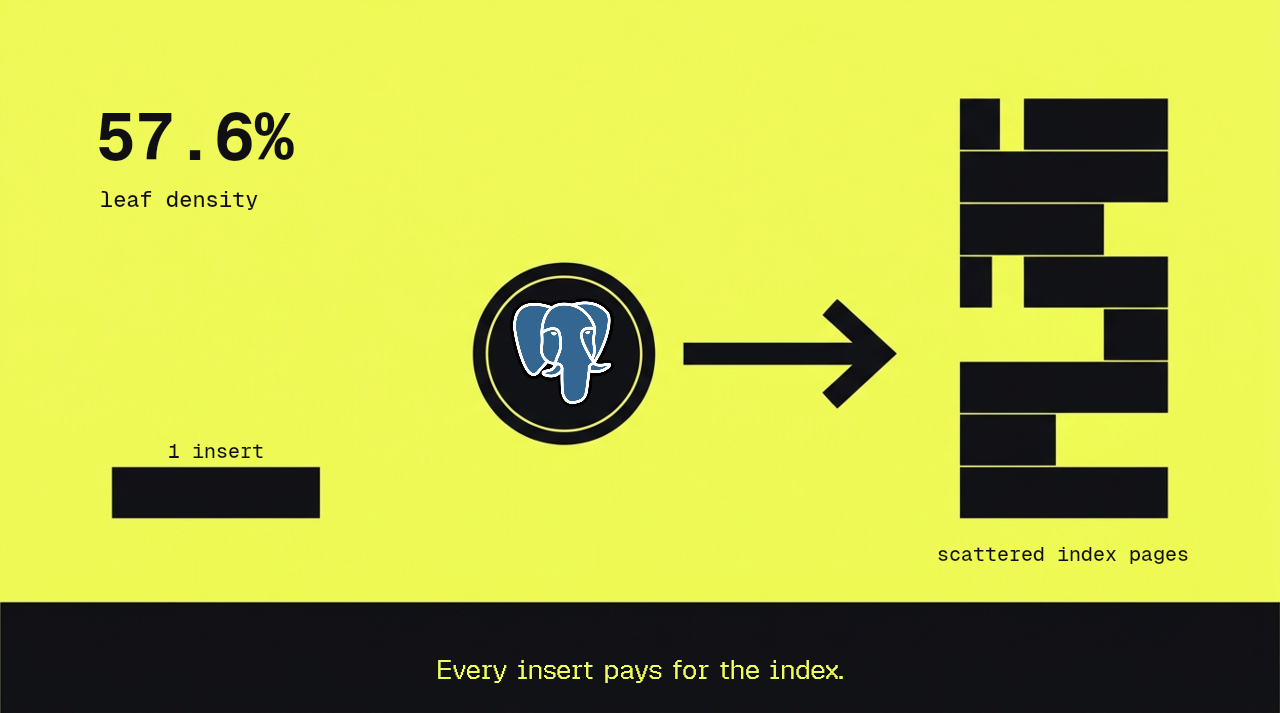
    Knowing When Your Composite Index Earns Its Write Cost

    This guide explains how to evaluate the trade-off of adding a composite index in PostgreSQL by quantifying its read benefits and write costs. It provides a method to measure the impact on ingest throughput and decide if the index earns its overhead based on your system's peak ingest ceiling.

    Timescaletigerdata.com8 min
  17. 53

    Concurrency Control: Your Aggregate Is Single-Threaded. Your Cluster Isn’t.

    This article distinguishes between serialization (preventing concurrent access) and arbitration (permitting access and rejecting losers) in distributed concurrency control. It argues that arbitration should be responsible for correctness, as serialization guarantees are conditional and can fail silently in multi-process environments, leading to data corruption.

    Atomic Objectatomicobject.com14 min
  18. 54

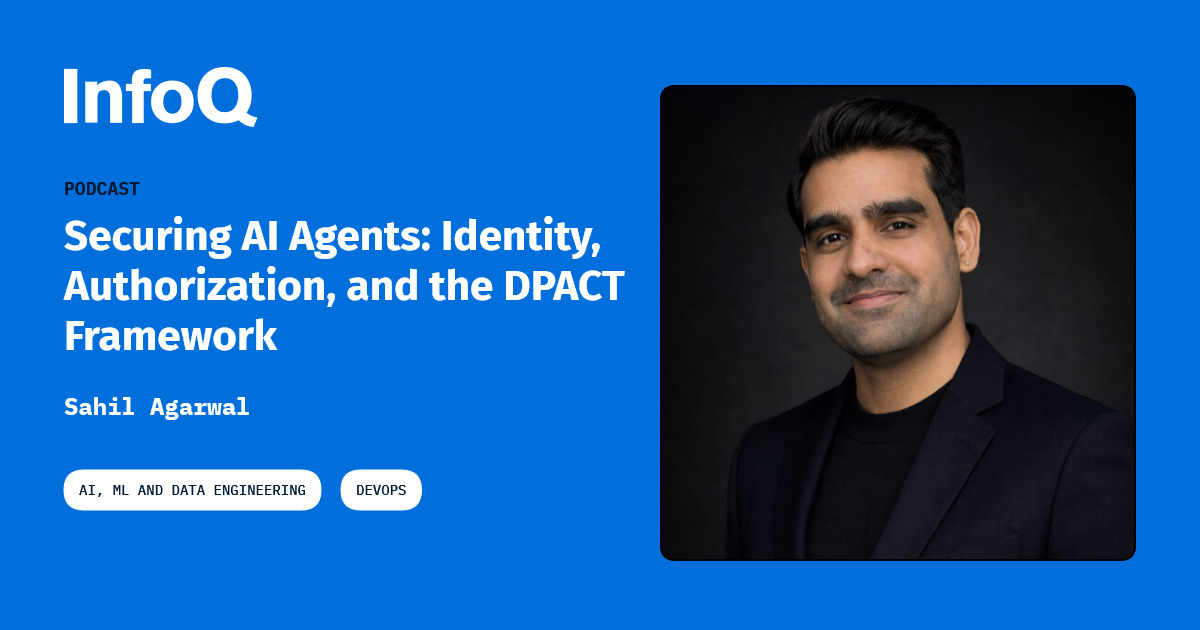
    Podcast: Securing AI Agents: Identity, Authorization, and the DPACT Framework

    This podcast discusses the critical challenges of identity, authorization, and security for AI agents. It introduces the DPACT framework (Delegation, Policy, Auditability, Context, Time) as a blueprint for building responsible agentic systems with bounded, delegated authority, moving beyond simple token-based access.

    InfoQinfoq.com29 mintalk
  19. 56

    How energy teams turn theft detection into governed action with Genie and AI business processes

    Databricks shows how to turn energy‑theft ML scores into a governed, end‑to‑end workflow using a Databricks App, Lakebase for live case state, Unity Catalog for data governance, and Genie One for natural‑language executive reporting. The pattern lets utilities act on alerts faster while staying compliant, and can be reused for other fraud‑type use cases.

    Databricksdatabricks.com6 min
  20. 57

    A Dialog Can Now Be a Native Desktop Window

    Codename One now supports native desktop windows for dialogs, fixing a bug where dialogs appeared on the wrong surface in multi-window applications. This allows dialogs to participate correctly in desktop window ordering and focus, with options for global or per-instance native mode.

    CodeName Onecodenameone.com3 min
  21. 58

    One App, More Than One Native Window

    Codename One now supports true native desktop windows via a new `Window` class that separates per‑surface state (paint queue, input routing, native peers) from the global `Display`. The change adds a `PaintSurface` abstraction, platform‑specific window back‑ends (AWT/Swing, Direct2D, GTK, UIWindowScene), and a migration path for components that assumed a single `Form`. Initial release has some UI…

    CodeName Onecodenameone.com11 min
  22. 59

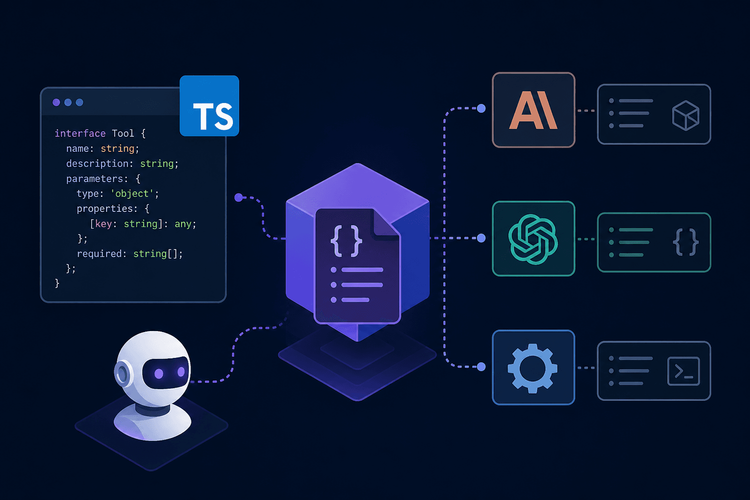
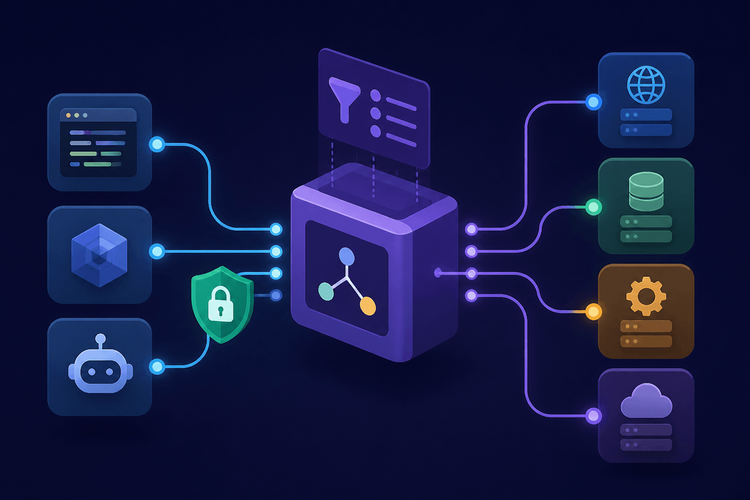
    Building Composite Model Context Protocol (MCP) Gateways in TypeScript

    Step‑by‑step tutorial showing how to build a stateless composite Model Context Protocol (MCP) gateway in TypeScript using Hono, Zod, and the MCP SDK. It covers config‑driven upstream registration, namespaced tool discovery, JSON‑RPC routing, per‑tool auth middleware, and a token‑bucket rate limiter, with concrete code snippets and design trade‑offs.

    SitePointsitepoint.com16 min
  23. 60

    CISA's Logging Reference Architecture for OMB M-26-14: What federal agencies should do next

    CISA’s Logging Reference Architecture translates OMB M‑26‑14 requirements into eight concrete shifts, from searchable storage tiers to schema‑first design and continuous validation. Agencies should use Elastic’s tools to build a heterogeneous, schema‑first logging architecture and file a plan by 18 Nov 2026 to meet the mandated maturity milestones.

    Elasticelastic.co11 min