proomt

Search

Search posts, papers, and topics

llm

RSS
  1. 122

    Open-weight models take 56% of token volume, Astra doubles Fable 5.1 spend

    Vercel’s September AI Gateway Production Index shows open‑weight models processing 56% of token volume (up from 7% in Dec 2025) while accounting for only 14% of spend. Token price fell 23.2% month‑over‑month. Anthropic’s Opus 5 captured 22.5% of spend, overtaking Fable 5 which dropped to 4.9%. OpenAI’s new GPT‑6 Astra grabbed ~7.7% of total gateway spend in its first 12 days, more than double Ant…

    Vercelvercel.com6 minHN2
  2. 123

    Training Specialist Models without Reasoning Trajectories for Domain Expert Distillation

    The paper shows that when specialist LLMs are trained only on QA pairs (no explicit reasoning supervision), their optimization implicitly selects a latent distribution of reasoning trajectories. By treating the distilled student as an agnostic probe—since it inherits only the sampled trajectories—the authors empirically demonstrate a strong correlation (across 27 specialist‑student pairs) between…

    Hugging Face Daily Papersarxiv.org1 minpaper
  3. 124

    DACA-GRPO: Denoising-Aware Credit Assignment for Reinforcement Learning in Diffusion Language Models

    DACA‑GRPO adds denoising‑aware credit assignment to GRPO‑style RL trainers for diffusion LLMs. It computes per‑token importance scores from intermediate denoising steps and uses stratified masking to reduce mean‑field bias in likelihood estimates. Plug‑and‑play on three existing GRPO methods, it yields consistent gains on seven downstream tasks (up to +5.6 pp math, +7.4 pp code, +36.3 pp constrai…

    Apple Machine Learning Researchapple.com1 minpaper
  4. 125

    Shared Selective Persistent Memory for Agentic LLM Systems

    Apple proposes a memory architecture for agentic LLMs that selectively persists reusable context (specs, schemas, configs, constraints) across sessions and users. Shared workspaces with role‑based access and a zero‑token data‑refresh mechanism cut token usage by 97×, reduce task time by 14×, and raise task‑completion rates to 96% versus 71%‑79% for baselines.

    Apple Machine Learning Researchapple.com1 minpaper
  5. 126

    Mind2Dialogue: Training Human-Aware Language Models by Simulating User Mental States

    Mind2Dialogue introduces a psychology‑guided simulator that generates user mental states and uses privileged distillation to train LLM assistants on Oracle responses that know those states. The resulting models improve personalization and theory‑of‑mind metrics by up to 41 percentage points versus standard instruction‑tuned baselines.

    Hugging Face Daily Papersarxiv.org2 minpaper
  6. 127

    Building an Internal Developer Platform with Artificial Intelligence

    This article discusses building internal developer platforms with AI agents that use semantic search across internal data sources like Git, Slack, and Jira. It highlights the need for guardrails to control agent actions and comprehensive observability via logs, metrics, and traces to understand agent behavior and improve developer experience.

    InfoQinfoq.com4 min
  7. 129

    Trajectory as the Teacher: Few-Step Discrete Flow Matching via Energy-Navigated Distillation

    Apple researchers propose Trajectory‑Shaped Discrete Flow Matching (TS‑DFM), a training‑time distillation method that replaces blind stochastic jumps in discrete flow‑matching with an energy‑based compass to select higher‑quality intermediate tokens. On a 170 M‑parameter language model, the 8‑step student outperforms the 1 024‑step teacher by 32 % perplexity while being 128× faster, beating basel…

    Apple Machine Learning Researchapple.com1 minpaper
  8. 131

    Presentation: Context Engineering at LinkedIn: How We Built an Organizational Context Layer for AI Agents with MCP

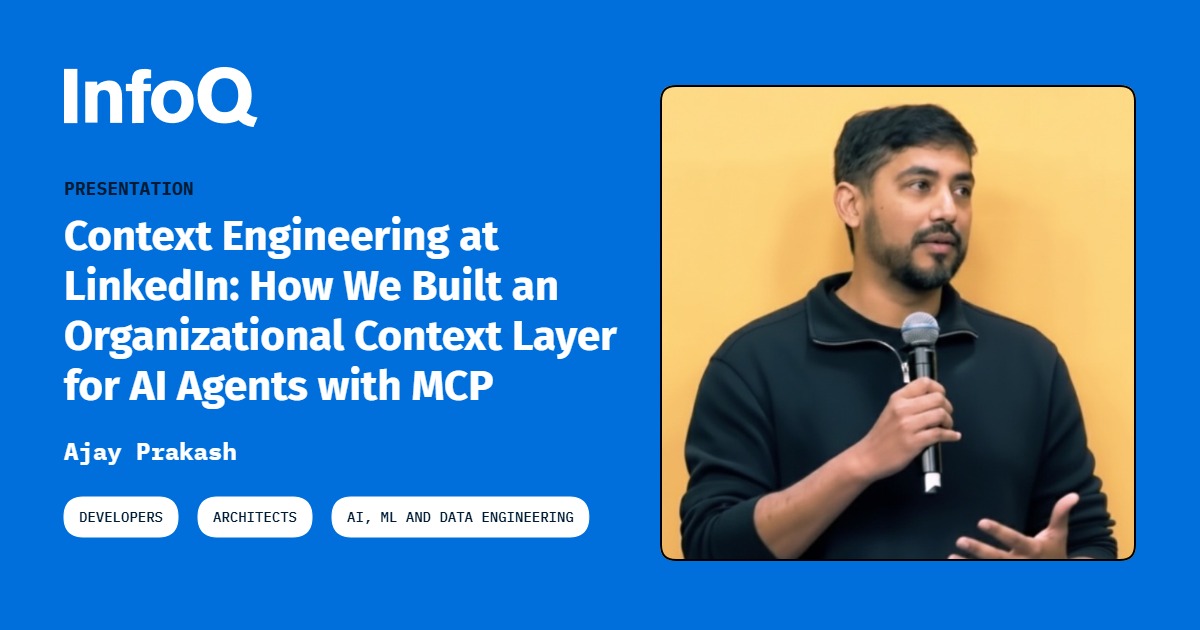
    LinkedIn built a “Contextual Agent Playbooks and Tools” layer that wraps internal services (code search, docs, feature flags, etc.) behind the open‑source Model Context Protocol (MCP). By feeding LLM‑powered coding agents the exact internal artifacts they need, the agents can diagnose incidents, generate PRs, and update incident tickets in minutes, delivering a reported 20 % productivity gain wit…

    InfoQinfoq.com28 mintalk
  9. 132

    Emergence World: Adversarial Stress-Testing of Long-Horizon Multi-Agent Systems

    Emergence World is a continuously running multi‑agent sandbox used to stress‑test frontier LLM‑based agents over weeks. Eight parallel worlds (seven homogeneous, one mixed) generated 850 k LLM calls and ~50 B tokens while agents pursued goals, used tools, and maintained persistent memory. The authors injected three adversarial events—prompt injection, misinformation, and private‑memory exposure—a…

    Hugging Face Daily Papersarxiv.org1 minpaper
  10. 133

    Decoy Direction Optimization: A Post-Hoc Defense Against LLM Abliteration

    Decoy Direction Optimization (DDO) is a post‑hoc weight‑editing defense for open‑weight LLMs that injects a high‑magnitude nonlinear decoy into MLP neurons, corrupting contrastive estimators used by Refusal Feature Ablation (RFA) attacks. The paper proves a spectral bound on the effect, evaluates DDO on six model families (including Llama‑3‑8B‑Instruct), and shows <10 % attack success rate (ASR)…

    Hugging Face Daily Papersarxiv.org1 minpaper
  11. 134

    OmniHarness: Harnessing Generalizable Visual Generation via Symbolic Policy Learning

    OmniHarness introduces a symbolic‑policy framework that extracts reusable procedural knowledge from multimodal LLM‑driven visual generation runs. By decoupling task logic from instance inputs, the system can instantiate, adapt, and compose policies for new visual tasks, using intermediate verification for on‑the‑fly refinement while keeping the underlying model frozen. Self‑directed practice task…

    Hugging Face Daily Papersarxiv.org1 minpaper
  12. 135

    E2A-Bench: Benchmarking Evidence-to-Action Reliability in Financial Chart Reasoning

    E2A‑Bench is a 969‑query benchmark for financial chart reasoning that evaluates vision‑language models across a full evidence‑to‑action chain using four metrics (UCR, RCI, ECI, NDR). Experiments on 20 VLMs expose hidden failures: low‑UCR models have only 6.4 % directional coverage, oracle‑aided verification cuts unsupported claims but can kill coverage, and fine‑tuning inflates BUY:SELL ratios by…

    Hugging Face Daily Papersarxiv.org1 minpaper
  13. 136

    Drift-Constrained Optimization: Only Direction Matters in Fine-Tuning Instruct Models

    The paper reframes fine‑tuning of instruction‑tuned LLMs as a direction‑selection problem under a fixed behavioral‑drift budget, showing that the update direction, not magnitude, determines trade‑offs between target performance and capability preservation. In QA‑only fine‑tuning of Qwen‑3 models, layer‑selective probing finds effective directions that boost scientific reasoning and multilingual t…

    Hugging Face Daily Papersarxiv.org1 minpaper
  14. 137

    Another Blueprint In The Wall: How to Ask Frontier AI Like a Kid?

    The paper experiments with prompting six frontier LLM families using a school‑audience framing and finds their architectural design suggestions converge on a common pattern, while removing the framing yields diverse outputs. It highlights a possible shared design prior among models and introduces the term "epistemic jailbreak" for the loss of provenance in speculative answers.

    Hugging Face Daily Papersarxiv.org1 minpaper
  15. 138

    MoME: Mixture-of-Memory Embeddings for Context-Aware Sparse Lookup

    The paper proposes Mixture of Memory Embeddings (MoME), a context‑aware sparse lookup that replaces each token’s single memory row with a gated mixture of multiple slots. Experiments on Llama‑3, MobileLLM and Qwen3 show MoME outperforms existing memory‑embedding baselines at equal parameter and FLOP budgets and exhibits interpretable routing for polysemous tokens.

    Hugging Face Daily Papersarxiv.org1 minpaper
  16. 139

    AI Skills with Matt Pocock

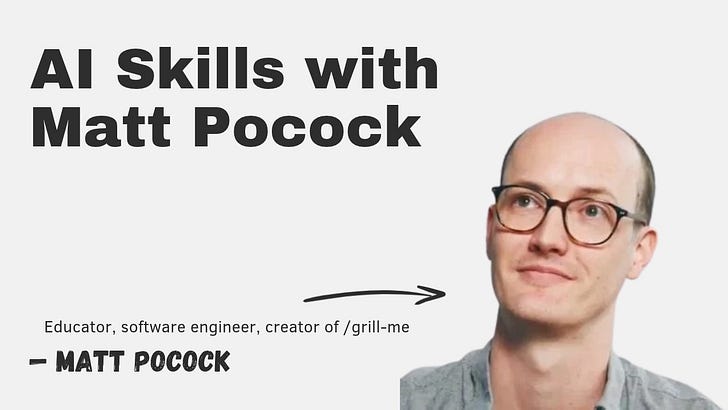
    Matt Pocock explains how he uses AI agents for software development, emphasizing "strategic programming" and guiding agents with "leading words" from classic engineering texts. He argues that this approach makes engineering fundamentals more critical than ever for creating agent-optimized codebases.

    The Pragmatic Engineerpragmaticengineer.com7 min
  17. 140

    Article: Your Next DSL Author Is a Language Model

    Typed Domain Grounding (TDG) embeds a DSL inside a mainstream language the LLM already knows (e.g., Kotlin) and uses the host compiler as an oracle. The author describes five building blocks—embedding, choosing a host language with high training‑data frequency, compiler‑driven type safety, a generate‑compile‑repair loop, and an on‑demand teaching tool—and shows measured results from kUML, a Kotli…

    InfoQinfoq.com18 min
  18. 141
    1 points

    MiniCPM5-2B Ranks First Among Open-Weight Models Under 4B

    MiniCPM5-2B, a 2.6 B‑parameter dense Llama‑style model, tops the Artificial Analysis GDPval‑AA v2 benchmark (831 Elo) and sits on the Pareto frontier of the Intelligence Index v4.2 despite being far smaller than competing models. The post breaks down its capability density, token‑cost efficiency, architecture, and three‑stage training (SFT, RL, on‑policy distillation) to explain why it outperform…

    SitePointsitepoint.com10 min
  19. 142

    ImpossibleRubrics: Stress-Testing Generated Rubrics as Reward Signals

    ImpossibleRubrics introduces a 169‑task benchmark of “impossible” prompts, each with a formal oracle certificate defining what an honest answer can claim. The authors generate rubrics downstream and test them adversarially, finding that many rubric generators are exploitable (8‑36% of the time) and that a single generic rubric (“be decisive, penalize hedging”) is exploited 64% of the time, while…

    Hugging Face Daily Papersarxiv.org1 minpaper
  20. 143

    Convergent Emergence of In-Context Learning Across Modalities

    The paper proposes the Convergent Emergence Hypothesis that few‑shot in‑context learning (ICL) shares a common difficulty profile across domains. Using a unified task suite, the authors evaluate ICL on six modalities—language, genome, integer sequences, time‑series, images, and proteins—showing that paired‑mapping ICL emerges in all and that per‑task benefits correlate across five modalities, sup…

    Hugging Face Daily Papersarxiv.org1 minpaper
  21. 144

    Build a Typed Context Compaction Gate for AI Agents

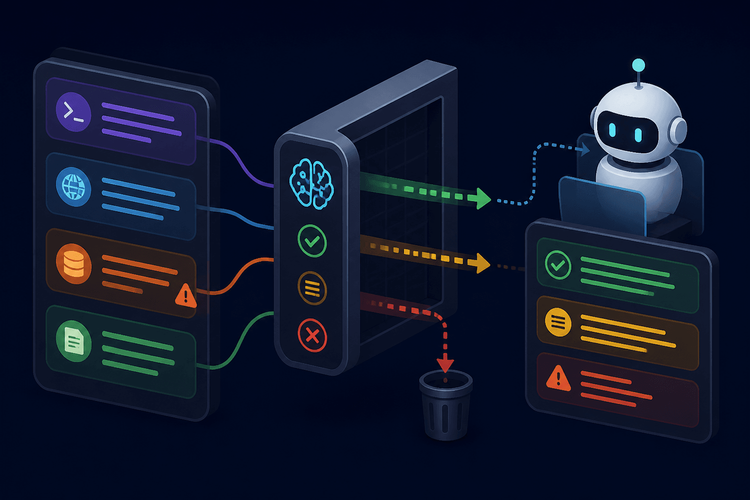
    A step‑by‑step tutorial showing how to build a typed context‑compaction gate for AI agents in TypeScript using LangChain and Zod. It defines a discriminated‑union schema for keep/summarize/discard actions, implements a fast gpt‑4o‑mini classifier, validates decisions at runtime, and wires the gate as middleware in an agent loop, with testing and production‑grade tuning advice.

    SitePointsitepoint.com16 min
  22. 145

    How To Write With An LLM

    Simon Willison argues that LLMs should be used as copyeditors, not as writers, and proposes a strict rule never to reuse any phrase they suggest. He shares a prompt for building a personal LLM proofreading tool.

    Simon Willisonsimonwillison.net1 min
  23. 146

    Glyph: A Multi-Strategy Agentic System for Column Description and Sensitivity-Ontology Tagging of Enterprise Data Catalogs

    Glyph is a production system that uses coordinated LLM agents and a fine‑tuned MiniLM encoder to automatically generate column descriptions and assign ontology tags in enterprise data catalogs. It combines code‑grounded retrieval, regex, and contrastive vector search, achieving NDCG@10 0.92 and MAP@100 0.90, and provides auditable provenance for each tag.

    Apple Machine Learning Researchapple.com1 minpaper
  24. 147

    Online Learning with LLM Experts from Limited Feedback

    The paper models prompt routing to multiple LLM experts as a bandit problem with limited feedback and proposes algorithms that achieve sublinear regret in both full‑information and bandit settings. Experiments demonstrate that the methods learn effective routing strategies across diverse LLMs using only a small feedback budget.

    Hugging Face Daily Papersarxiv.org2 minpaper
  25. 148

    Beyond Top-k Skill Retrieval: Diversity-Aware Skill Routing for LLM Agents

    Beyond Top‑k Skill Retrieval: Diversity‑Aware Skill Routing (DSR) applies a Determinantal Point Process with a query‑residual diversity kernel to rerank skill candidates, balancing relevance and redundancy. On the SkillRouter benchmark it raises recall and full‑coverage, especially for multi‑skill queries, showing that skill routing benefits from set‑selection rather than independent ranking.

    Hugging Face Daily Papersarxiv.org1 minpaper
  26. 149

    Dynamically Scaled Activation Steering

    Dynamically Scaled Activation Steering (DSAS) is a method‑agnostic framework that learns per‑token, per‑layer scaling factors to turn existing activation‑steering interventions on only when a model is likely to produce undesired output (e.g., toxic text). The scaling can be optimized jointly with any steering function, improves the toxicity‑utility trade‑off on language models, transfers to text‑…

    Apple Machine Learning Researchapple.com1 minpaper
  27. 150

    Alibaba Open Sources OpenCodeReview for AI-Assisted Code Review

    Alibaba open-sourced OpenCodeReview, an AI-powered code review CLI that combines deterministic pipelines for file selection and rule matching with an LLM agent for dynamic analysis. Used internally for two years, it claims higher precision and F1 scores than Claude Code with fewer tokens, though external reviews note recall limitations.

    InfoQinfoq.com2 min